

As you already know, water in plastic containers might spoil quickly. But we are compelled to use them due to the availability, low cost, and easy-to-handle nature of plastic containers.
In January 2024, scientists from Columbia and Rutgers Universities discovered an alarming fact: an average of 240,000 plastic particles per litre in bottled water, with about 90% classified as nanoplastics. The findings were published in the Proceedings of the National Academy of Sciences.

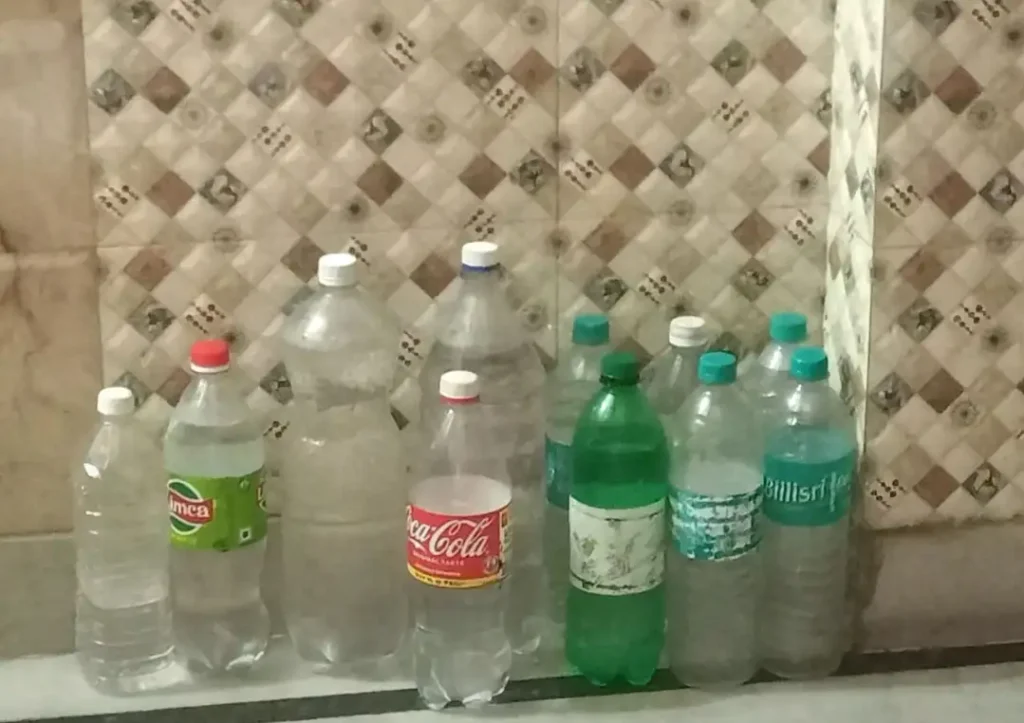
What happens when you consume plastic particles from plastic bottles or other sources ?
When you drink water from plastic bottles, you also ingest microplastics and nanoplastics. Over time, chemicals leaching from plastics can enter your body through bottles, food packaging, and even skincare products. These chemicals are linked to several health problems, including:
1. Insulin resistance
2. Weight gain
3. Endocrine disruption
4. Reduced reproductive health
5. Increased risk of cancer
Sources of plastic particles
There are many sources of plastic particles including these two :
1. Tiny plastic particles like microbeads in cosmetics and plastic pellets (nurdles) used in industrial production. Microbeads are banned in many countries but according to The Hindu ( August 2024 ) microbeads are using in cosmetics market of India as well as many other countries.
2. Breakdown of larger plastic items, such as fishing gear and discarded plastic waste and through many other ways.
What are the best alternatives of plastic bottles ?
According to Eshanka Wahi, (culinary nutritionist and founder of “Eat Clean with Eshanka”)
Switch to bottles made from stainless steel, glass, or BPA-free plastic to reduce your exposure to harmful chemicals and microplastics.”


References :
World Economic Forum
Times of India